If you get headaches regularly, you've probably wondered what sets them off. Was it the coffee, the weather, the late night or the stressful meeting? Knowing your headache triggers can help you prevent some headaches, but finding them is harder than most people expect, and a lot of time gets wasted chasing the wrong ones.
This guide covers the most common headache triggers, why triggers rarely act alone, how to tell a real trigger from an early sign of an attack, and a simple way to find your own.
How common are triggers?
Very. In a 2007 study of 1,207 people with migraine, 75.9% said they had at least one trigger. The most commonly reported were stress (79.7%), hormonal changes in women (65.1%), not eating (57.3%), weather (53.2%) and disturbed sleep (49.8%), followed by smells, neck pain, light and alcohol.2
Tension headaches have triggers too. The NHS lists stress, sleep problems and caffeine as common causes.4
The most common headache triggers
These are the triggers that come up most often, both in research and in the advice of health services. Triggers differ from person to person, so you may recognize several of these, or none.1
Stress. The most commonly reported trigger of all.2 It also tends to come with other triggers, like skipped meals and short nights. Our guide to stress headaches covers this in detail.
Skipping meals. The Migraine Trust notes that many people find migraine attacks become more frequent and more severe after a period without eating.1 The NHS lists not eating regular meals among common causes of headaches in general.3 See hunger headaches for how to prevent them.
Sleep changes. Too little sleep is a well-known trigger, but so is more sleep than usual, such as sleeping in on the weekend. A change in your usual sleep pattern can have the same effect.1 Our guide to sleep and headaches explains why a regular routine matters so much.
Hormonal changes. Many women notice headaches around their period. The NHS lists periods and menopause among common causes of headaches.3
Caffeine. Both too much and too little. Too much caffeine can trigger a migraine attack for some people, but cutting it out suddenly can too, so the Migraine Trust suggests reducing it gradually if you want to cut down.1 See caffeine headaches for how much is too much and how to cut down safely.
Alcohol. Many people find alcohol triggers migraine, with red wine the most commonly reported drink, though it may not happen every time.1 The NHS also lists drinking too much alcohol as a common cause of headaches.3
Dehydration. Not drinking enough fluids can appear to trigger or worsen migraine attacks for some people. The Migraine Trust suggests six to eight cups or glasses of fluid a day is usually enough.1
Weather. Changes in temperature, air pressure and humidity seem to affect many people with migraine.1 You can't control the weather, but knowing it affects you can help you plan. More in our guide to weather headaches.
Light, noise and smells. Bright or flickering lights, loud noise and strong smells, like perfume, are all frequently reported triggers, and they can make an attack worse once it has started.1 See perfume headaches for how to deal with strong smells.
Screens and posture. Long stretches at a screen have been linked to migraine attacks for some people, and eye strain can lead to tension headaches.1 The NHS also lists bad posture and eyesight problems among common causes of headaches.3 Our guide to screen headaches covers eye strain and screen breaks.
Specific foods. Chocolate, cheese, foods containing MSG and other foods are often blamed, but the Migraine Trust notes there's a lack of evidence that foods trigger migraine for most people, and that studies have had inconsistent results. It recommends against cutting out foods unless you're sure one triggers your migraine.1
Too many painkillers. Taking painkillers for headaches too often can itself cause headaches.4 If you're taking pain relief on many days each month, read about medication overuse headache and talk to your doctor.
Triggers rarely act alone
One of the most useful ideas about triggers is what the Migraine Trust calls the "threshold". Only a few factors make a big difference to your risk on their own. More often, it takes a combination: you might cope with a skipped meal, a short night or a stressful day, but two or three together push you over the threshold for an attack. Your threshold also moves up and down with things like hormonal changes and illness.1
This explains why the same glass of wine is fine one evening and brings on a headache the next. It also means that the most effective changes are often the boring ones that keep your threshold high: regular sleep, regular meals and steady caffeine.
Trigger or warning sign?
Sometimes what looks like a trigger is actually the start of the attack. In the hours before the headache, during what's called the prodrome or warning stage, many people with migraine get food cravings, neck stiffness, mood changes or extra sensitivity to light, sound and smells.1
That can lead to the wrong conclusions. The Migraine Trust gives the example of chocolate: if you eat it because of a craving in the warning stage, chocolate can look like a trigger when the attack had already begun. The same goes for noticing bright lights or neck pain.1 Knowing your warning signs is useful in itself, because it lets you treat an attack earlier.
How to find your own triggers
A headache diary is the best tool for this, because memory is unreliable. Both the Migraine Trust and the NHS suggest keeping one.13 It can be a notebook or your phone; we compare the two in paper diary or an app. For a few weeks, note:
- When you went to sleep and woke up.
- When you ate, and how much caffeine and alcohol you had.
- Your stress level and anything unusual about the day.
- Your period, if you have one.
- When each headache started, and how bad it was.
Record the days without headaches too. A suspected trigger only means something if headaches follow it more often than not. Then test one change at a time, for a few weeks each, so you can tell what made a difference.
Keep it in proportion. The Migraine Trust points out that trying to identify and avoid every trigger takes a lot of time and effort, can make you anxious, and that focusing on it too much can do more harm than good. Avoiding triggers may reduce how often you get attacks, but it may not stop them altogether, and many people also need treatment.1 A diary can also show that some things you blamed don't matter much at all, which is just as useful.
When to see a doctor
See a doctor if you regularly get headaches, or if a headache isn't getting better after you've tried treating it yourself.3 If you already know your triggers but still get frequent attacks, ask about preventive treatment.
Get urgent help for a headache that starts suddenly and is extremely painful, or comes with weakness, numbness, confusion, trouble speaking, loss of vision, a seizure, or a high temperature with a stiff neck.3 Our guide on what to do when a headache starts lists the warning signs.
Getting started
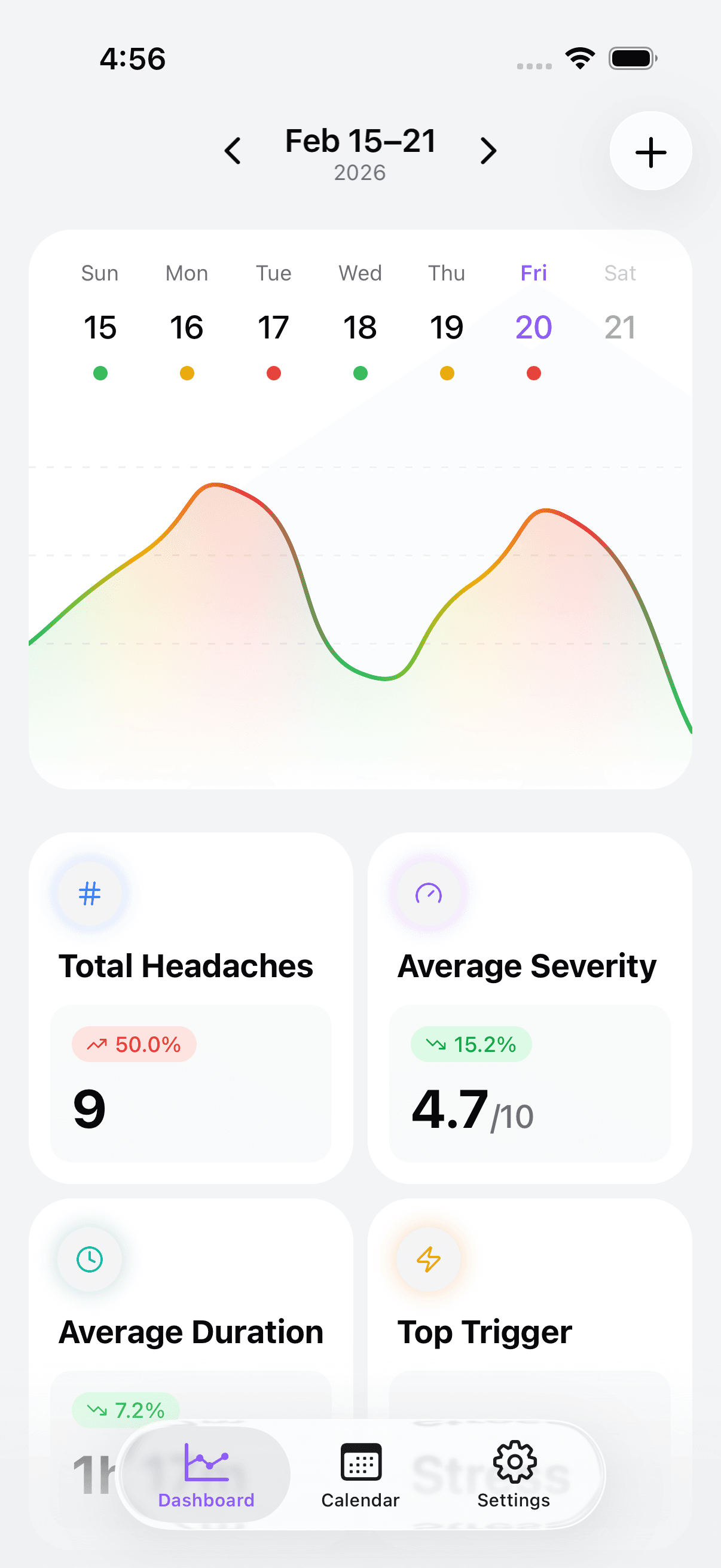
Pick your two most likely suspects from the list above, and track them alongside your headaches for the next month. Headache & Migraine Diary lets you log each headache in seconds and tag possible triggers like stress, lack of sleep, caffeine, alcohol, food, weather and hormones, so after a few weeks you can see which ones actually show up before your headache days.