You worked through lunch, it's mid-afternoon, and a dull ache is spreading across your head. Hunger headaches are one of the most common kinds of headache, and one of the easiest to overlook, because skipping a meal rarely feels like a big deal at the time.
This guide explains why going too long without food brings on headaches, why people with migraine are especially affected, how caffeine and meal timing get tangled together, and the simple habits that prevent most hunger headaches.
Why skipping meals causes headaches
The NHS lists not eating regular meals among the common causes of headaches, alongside stress, dehydration and poor posture.1 Doctors even have a formal name for the most typical version. The International Classification of Headache Disorders describes "headache attributed to fasting" as a diffuse, non-throbbing headache, usually mild to moderate, that comes on after at least eight hours without food and gets significantly better after eating.4 The longer the fast, the more likely the headache.4
What exactly causes it is less clear than you might think. The Migraine Trust explains that missing meals is thought to cause a drop in blood sugar that can trigger migraine attacks.2 But the international classification notes that fasting headaches can happen without low blood sugar, and that there's no conclusive evidence low blood sugar is the cause.4 Whatever the mechanism, the practical lesson is the same: long gaps without food make headaches more likely, and eating usually helps.
Hunger and migraine
If you have migraine, skipping meals matters even more. Fasting headaches are significantly more common in people who already have a headache disorder like migraine, and in someone with migraine, a fasting headache may turn into a full migraine attack.4
The Migraine Trust describes fasting or missing meals as a common migraine trigger, and notes that many people find their attacks become more frequent and more severe after a period without eating.2 It also points out that the same drop can happen after eating sugary snacks, starting a diet, or exercising without eating enough beforehand.3
Hunger rarely acts alone. The Migraine Trust describes a "threshold" for attacks: skipped meals, little sleep and a lot of stress may each be manageable on their own, but two or three together can push you over.2 That's why busy days, when you're stressed, short on sleep and eating at your desk if at all, are so often headache days. Our guide to headaches at work covers that combination in more detail.
The caffeine connection
A missed or late meal often comes with a missed or late coffee, and that's a headache trigger of its own. If you regularly have more than about 200 mg of caffeine a day, the International Classification of Headache Disorders describes a caffeine-withdrawal headache that can start within 24 hours of your last dose when your usual intake is interrupted or delayed. It typically eases within an hour of having caffeine.5
So if your "hunger headache" goes away after a late breakfast and coffee, it may have been partly caffeine. The Migraine Trust suggests keeping both the amount and the timing of caffeine consistent, at weekends as well as on weekdays, and cutting down gradually rather than stopping suddenly if you want to have less.3 This is a big part of why so many people get weekend headaches: sleeping in pushes back breakfast and coffee by hours.
When hunger headaches tend to strike
Hunger headaches follow the gaps in your day. Common patterns include:
- Late morning, after skipping breakfast or having only coffee.
- Mid-afternoon, after working through lunch.
- On waking, after a long gap since dinner. The Migraine Trust suggests a healthy snack before bed may help if you often wake with a headache.3 Our guide to morning headaches covers other reasons for waking with a headache.
- On busy or disrupted days, such as travel days, long meetings or deadlines, when meals slip without you noticing.
- During planned fasts, including diets and religious fasting.
How to prevent hunger headaches
Eat at regular times. The Migraine Trust's main advice is to stick to regular mealtimes and not go too long without eating.2 The NHS also advises not skipping meals when you have a headache, even if you don't feel like eating.1
Don't skip breakfast. Even a small breakfast shortens the overnight gap, which is usually the longest of the day.
Choose foods that keep you going. For most people with migraine, the Migraine Trust recommends a healthy, balanced diet with regular mealtimes, based on high-fiber or wholegrain starchy foods with some protein. It suggests cutting down on sugary foods like cakes and biscuits, which can make blood sugar spike. If low blood sugar seems to trigger your attacks, it recommends small, frequent, low-sugar meals, with small nutritious snacks between meals if you need them.3
Plan for busy days. Hunger headaches usually come from days that don't go to plan rather than from poor choices. Keep a snack in your bag or desk, put lunch in your calendar, and eat before a long meeting or journey rather than after it.
Eat before you exercise. Exercising without enough food beforehand can have the same effect as skipping a meal.3
Drink enough too. Dehydration is a separate headache trigger, and it's easy to forget to drink on the same days you forget to eat. The Migraine Trust suggests six to eight cups or glasses of fluid a day is usually enough.3
If you're fasting for religious or other reasons, plan ahead. Eat a balanced meal before the fast starts, keep your caffeine intake steady or reduce it gradually in the weeks before, and if you have migraine, talk to your doctor about how to manage attacks during the fast.
Find your own pattern
Hunger is easy to blame and easy to miss. A headache diary shows whether it's really a factor for you. For a couple of weeks, note when you ate and had caffeine, and when any headache started. Look for headaches that follow long gaps without food, and for days when you ate regularly and didn't get one. If headaches still come on regularly fed days, something else may be the bigger factor. Our guide to headache triggers explains how to tell real triggers from coincidences.
When to see a doctor
If you have diabetes and take insulin or certain other diabetes medicines, a headache with hunger could be a sign of low blood sugar. The NHS lists symptoms of low blood sugar including feeling hungry, dizzy, shaky, sweaty, irritable or confused, and advises people with diabetes to check their blood sugar if they can. Low blood sugar is rare in people without diabetes.6 If you don't have diabetes but often feel shaky, sweaty or faint when you haven't eaten, mention it to your doctor.
See a doctor if you regularly get headaches, or if a headache isn't getting better after you've tried treating it yourself.1
Get urgent help for a headache that starts suddenly and is extremely painful, or comes with weakness, numbness, confusion, trouble speaking, loss of vision, a seizure, or a high temperature with a stiff neck.1 Our guide on what to do when a headache starts lists the warning signs.
Getting started
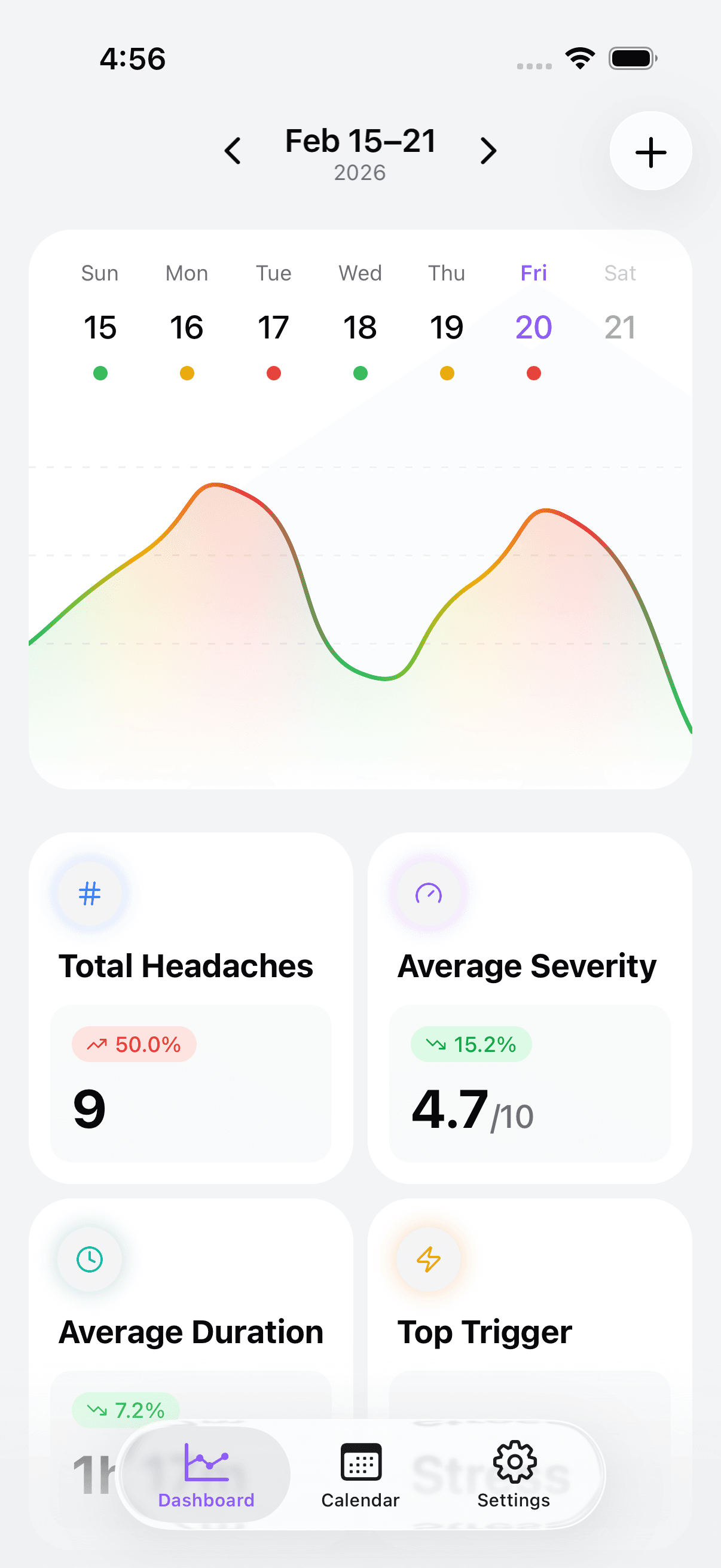
For the next two weeks, eat breakfast and lunch at roughly the same times every day, including weekends, and keep a snack with you for days that go off plan. To see whether it makes a difference, Headache & Migraine Diary lets you log each headache in seconds and tag food and caffeine as possible triggers, so you can look back and see whether your headache days line up with skipped meals.