A headache is starting. Maybe it's a familiar dull ache, maybe the first throb of a migraine. What you do in the next half hour can make a real difference to how the rest of your day goes, and in rare cases, a headache is a sign that you need medical help straight away.
This guide walks through what to do when a headache starts, in order: check for warning signs first, work out what kind of headache it is, take the steps that help most headaches, avoid the things that make them worse, and know when to see a doctor.
Step 1: Check for warning signs
Most headaches go away on their own and aren't a sign of anything serious.1 But a few need urgent care. Check these first, every time.
Call your local emergency number or go to the emergency department if you have a headache and any of these:12
- It started suddenly and is extremely painful.
- You've had a seizure (fit).
- Numbness or weakness in your body or face, especially on one side.
- Difficulty speaking, balancing, walking or remembering things.
- You feel drowsy or confused.
- Loss of vision, or blurred or double vision.
- A very high temperature, a stiff neck, bright lights bothering you, or a rash that doesn't fade when a glass is rolled over it.
- A head injury in the last three months.
Don't drive yourself to the emergency department. Ask someone to drive you, or call an ambulance.1
Get an urgent appointment with a doctor, or call your local health advice line, if you have a headache with vision or eye problems, a headache triggered or made worse by coughing, sneezing, bending down or exercising, a headache with vomiting, or a headache with jaw pain when eating or a sore, tender scalp.1 The NHS also advises getting urgent help if a migraine attack has lasted longer than 72 hours, if aura symptoms last longer than an hour, or if you're pregnant or have just had a baby.2
If none of these apply, carry on.
Step 2: Work out what kind of headache it is
Knowing the type helps you choose what to do. A tension headache usually feels like pressure or a tight band on both sides of the head, and you can normally carry on with your day.3 A migraine is usually a throbbing headache, often on one side, that can be severe and worse when you move, often with nausea and sensitivity to light and sound. Some people get an aura first, such as zigzag lines or flashing lights.2 Our guide to tension headache vs migraine explains the differences in detail.
If this is a new kind of headache for you, or it feels different from your usual ones, take that seriously and check with a doctor.
Step 3: First steps that help
Treat it early. If you're going to take painkillers, the NHS advises taking them as soon as a migraine starts, rather than waiting to see if it gets worse.2 For general headaches, the NHS suggests paracetamol or ibuprofen.1 If you've been prescribed migraine medicine, such as a triptan, follow your doctor's advice on when to take it.
Drink some water. The NHS advises drinking plenty of water when you have a headache.1
Eat something. Don't skip meals, even if you don't feel like eating.1 If you've gone a long time without food, eating may be the most useful thing you do. Our guide to hunger headaches explains why.
For migraine, lie down in the dark. The NHS suggests sleeping or lying down in a darkened room during a migraine attack.2 Some people also find that cold packs or headache caps take the edge off.
For tension headaches, relax your muscles. The NHS suggests activities that help you relax, like exercise, yoga and massage, and heat or cold packs if your neck is sore.3 Stress can make headaches worse, so if you can, take a break from whatever you were doing.1
Step 4: What to avoid
Some common reactions to a headache can make it worse. The NHS advises not to:1
- Skip meals, even if you don't feel like eating.
- Sleep more than usual, which can make the headache worse.
- Strain your eyes for a long time, for example by staring at a screen.
- Drink alcohol.
And watch how often you take painkillers. The NHS advises not taking painkillers for more than two days a week for migraine, because taking them too often can cause more headaches and make migraine harder to treat.2 Painkillers for tension headaches can cause the same problem if you take them too often or for a long time.3 This is called medication overuse headache, and it's a common reason headaches become more frequent over time.
Step 5: Afterwards, write it down
Once the headache has passed, take a minute to note when it started, how bad it was, what it felt like, what you took and whether it helped. It's also worth noting anything unusual about the day, like a missed meal, a short night or a stressful morning. A headache diary turns these notes into patterns: which treatments work for you, how often you're taking painkillers, and what tends to come before your headaches. Our guide to headache triggers explains how to use those patterns.
When to see a doctor
See a doctor if you regularly get headaches, or if a headache isn't getting better, or is getting worse, after you've tried treating it yourself.1 For migraine, see a doctor if your attacks are severe, getting worse or lasting longer than usual, if you get them more than once a week, or if you're finding them hard to control.2 Treatment, including medicines to prevent attacks, can help.2
And always go back to step 1. If a headache comes with any of the warning signs above, get help straight away, even if you usually get headaches.
Getting started
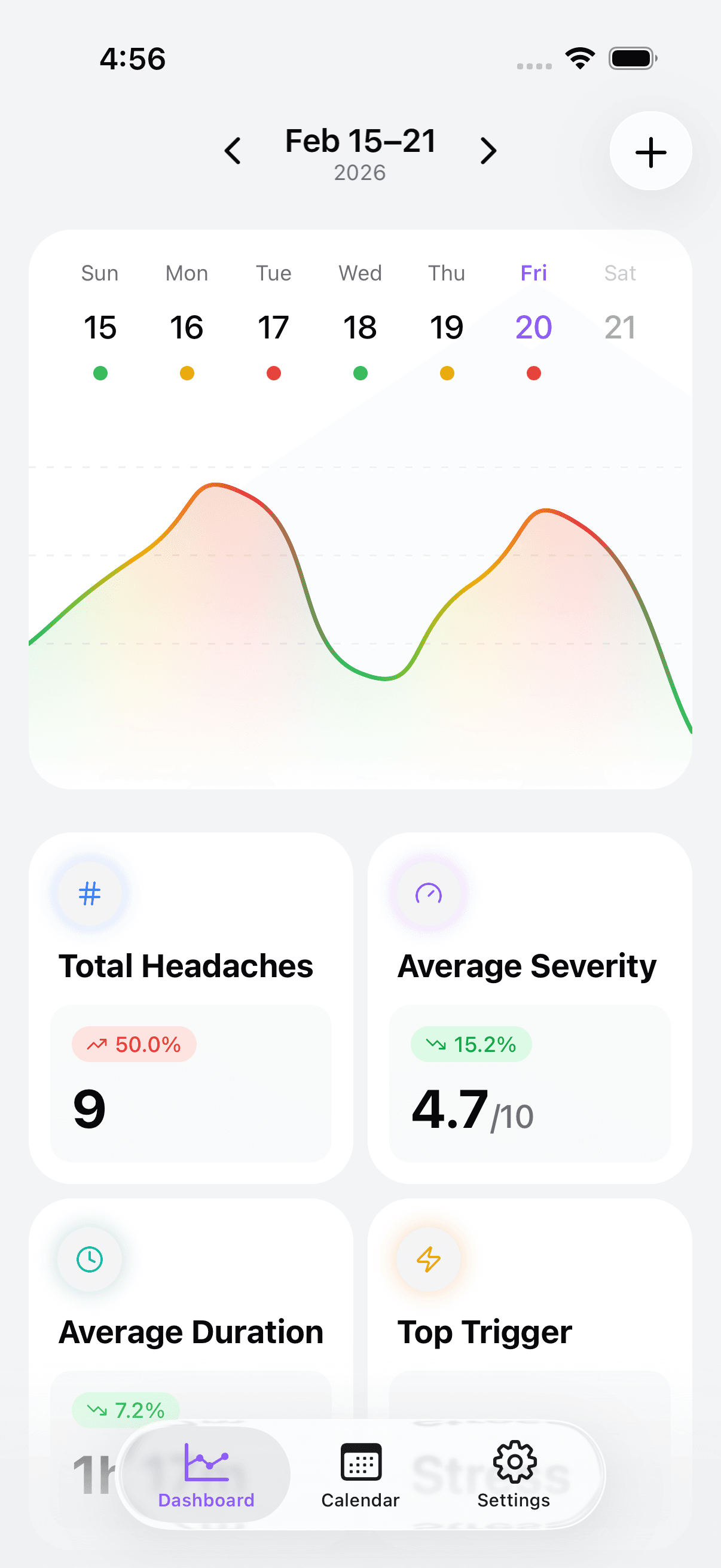
Save the warning signs above somewhere you'll find them, and next time a headache starts, try treating it early with water, food and your usual medicine. Headache & Migraine Diary lets you log each headache in seconds, with the medication you took, so you can see what works and keep an eye on how many days a month you're taking painkillers.