Caffeine is strange when it comes to headaches. Miss your morning coffee and your head starts to pound. Have one coffee too many and you get a headache anyway. And the painkiller you take for it may contain caffeine too.
Caffeine headaches come in more than one form, and the fix depends on which one you have. This guide explains how caffeine withdrawal causes headaches, when too much caffeine is the problem, how much is reasonable if you have migraine, and how to cut down without making things worse.
Can caffeine cause headaches?
Yes, in two opposite ways. Regular caffeine can make your body depend on it, so a missed or late dose brings on a withdrawal headache. And for some people, caffeine itself is a trigger: the Migraine Trust says research suggests between 6.3% and 14.5% of people with migraine find that caffeine triggers their attacks.1 The FDA also lists headache among the signs of having too much caffeine.4
At the same time, caffeine can help. The American Migraine Foundation notes that for some people with migraine, a cup of coffee can bring relief in the middle of an attack, and that the amount you have is often what decides whether caffeine helps or hurts.2 Where that line falls varies a lot from person to person.2
Caffeine withdrawal headaches
This is the most common kind of caffeine headache, and doctors have a formal definition for it. The International Classification of Headache Disorders describes a caffeine-withdrawal headache in people who have had more than 200 mg of caffeine a day for more than two weeks, when that intake is interrupted or delayed. The headache starts within 24 hours of the last caffeine, and either goes away within an hour of having about 100 mg of caffeine or clears up on its own within seven days of stopping completely.3
You don't need a huge habit to depend on caffeine. The American Migraine Foundation says dependence can develop in as few as seven days, and as little as 100 mg a day can keep it going.2
Withdrawal headaches tend to follow changes in routine rather than caffeine itself:
- Weekends and days off, when you sleep in and your first coffee comes hours later than usual. The Migraine Trust advises keeping your weekday coffee routine at the weekend too.1 This is one reason for weekend headaches.
- Busy mornings, when breakfast and coffee both get skipped. That overlap with hunger headaches makes it hard to tell which one caused the pain.
- Travel, illness or a hospital stay, when your normal drinks aren't available.
- Quitting suddenly, for example on a new diet or a health kick.
A useful clue: if a headache reliably appears on days your coffee is late, and eases soon after you have some, withdrawal is a likely explanation.2
When too much caffeine is the problem
There's no single amount of caffeine that triggers headaches. The Migraine Trust says one cup of tea or coffee may be enough for some people, while others need several.1
Researchers aren't sure why caffeine triggers migraine in some people. The Migraine Trust describes a few possible reasons: caffeine can make you urinate more, and dehydration is a common trigger; caffeine causes the body to lose magnesium; and some people may crave caffeine in the early, sleepy stage of an attack, so the coffee gets the blame for a migraine that had already started.1
Frequent caffeine can also make headaches more common overall. The American Migraine Foundation says caffeine often contributes significantly to frequent and chronic daily headaches, and suggests people with daily headaches consider avoiding caffeine completely.2
How much caffeine is too much with migraine?
For most adults, the FDA has cited 400 mg a day, about two to three 12-ounce cups of coffee, as an amount not generally associated with negative effects, though sensitivity varies widely between people.4 That figure is about general health, not headaches.
For migraine, the advice is lower. The American Migraine Foundation says doctors recommend that people with episodic migraine limit caffeine to one or two drinks a day, or 200 mg.2 The Migraine Trust also points to 200 mg a day, which it puts at roughly two cups of tea, one mug of filter coffee, two mugs of instant coffee or five cans of cola. Just as important, it advises having the same amount each day to avoid withdrawal headaches.1
Caffeine amounts vary more than most people expect. The FDA gives these typical ranges for a 12-ounce drink:4
- Regular brewed coffee: 113 to 247 mg
- Energy drink: 41 to 246 mg
- Caffeinated soft drink: 23 to 83 mg
- Black tea: 71 mg
- Green tea: 37 mg
Caffeine also turns up in chocolate, some over-the-counter medicines, energy bars and supplements, and even decaf coffee contains a little, typically 2 to 15 mg in an 8-ounce cup.4
Caffeine in headache medicine
Some over-the-counter painkillers contain caffeine because it can boost the painkiller's effect.1 The American Migraine Foundation adds that it can help the body absorb these medicines.2
That's useful, but it comes with a catch. Taking painkillers too often can cause medication overuse headache, where headaches get worse because of the medicine itself. The Migraine Trust advises avoiding combination painkillers on 10 or more days a month, and simple painkillers like paracetamol (acetaminophen) or ibuprofen on 15 or more days a month.1 Caffeine-containing painkillers can also add to the total caffeine you're having each day, so check the label.
If you need painkillers often, talk to your doctor about other options rather than taking more.1
How to cut down on caffeine without a headache
The key is to go slowly. Stopping suddenly is exactly what causes withdrawal headaches. The American Migraine Foundation suggests reducing your caffeine by about 25% each week,2 and the FDA also advises cutting back gradually, noting that withdrawal isn't considered dangerous but can be unpleasant.4
A practical way to do it:
- Add up what you have now. Count every source for a few days: coffee, tea, cola, energy drinks, chocolate and any medicines.
- Keep the timing the same. Have your first drink at your usual time, every day, including weekends.
- Reduce in small steps. Swap one drink for a smaller one, mix regular with decaf, or switch one coffee to tea, then hold that level for a week before the next step.
- Drink water too. The American Migraine Foundation suggests drinking more water while you change your caffeine habits.2
If you'd rather keep your caffeine, that's fine for many people. The goal is a steady, moderate amount at regular times, not necessarily zero.1
Is caffeine a trigger for you?
Caffeine is easy to blame and easy to miss, so it's worth testing rather than guessing. The American Migraine Foundation suggests tracking your caffeine intake alongside your headaches, and looking at patterns: do headaches follow your morning coffee, or show up on days you skip it?2 The Migraine Trust also recommends keeping a migraine diary to work out whether caffeine is a trigger for you and, if so, how much sets it off.1
Remember that caffeine rarely acts alone. A late coffee often comes with a skipped meal and a short night's sleep. Our guide to headache triggers explains how to tell real triggers from coincidences.
When to see a doctor
See a doctor if you regularly get headaches, or if a headache isn't getting better, or is getting worse, after you've tried treating it yourself.5 It's also worth asking for advice if you're pregnant or trying to become pregnant, or if you have a condition or take a medicine that may make you more sensitive to caffeine.4
Get emergency help for a headache that starts suddenly and is extremely painful, or that comes with a seizure, numbness or weakness, confusion or drowsiness, trouble speaking, balancing or walking, loss of vision, or a very high temperature with a stiff neck.5 Our guide on what to do when a headache starts covers the warning signs in more detail.
Getting started
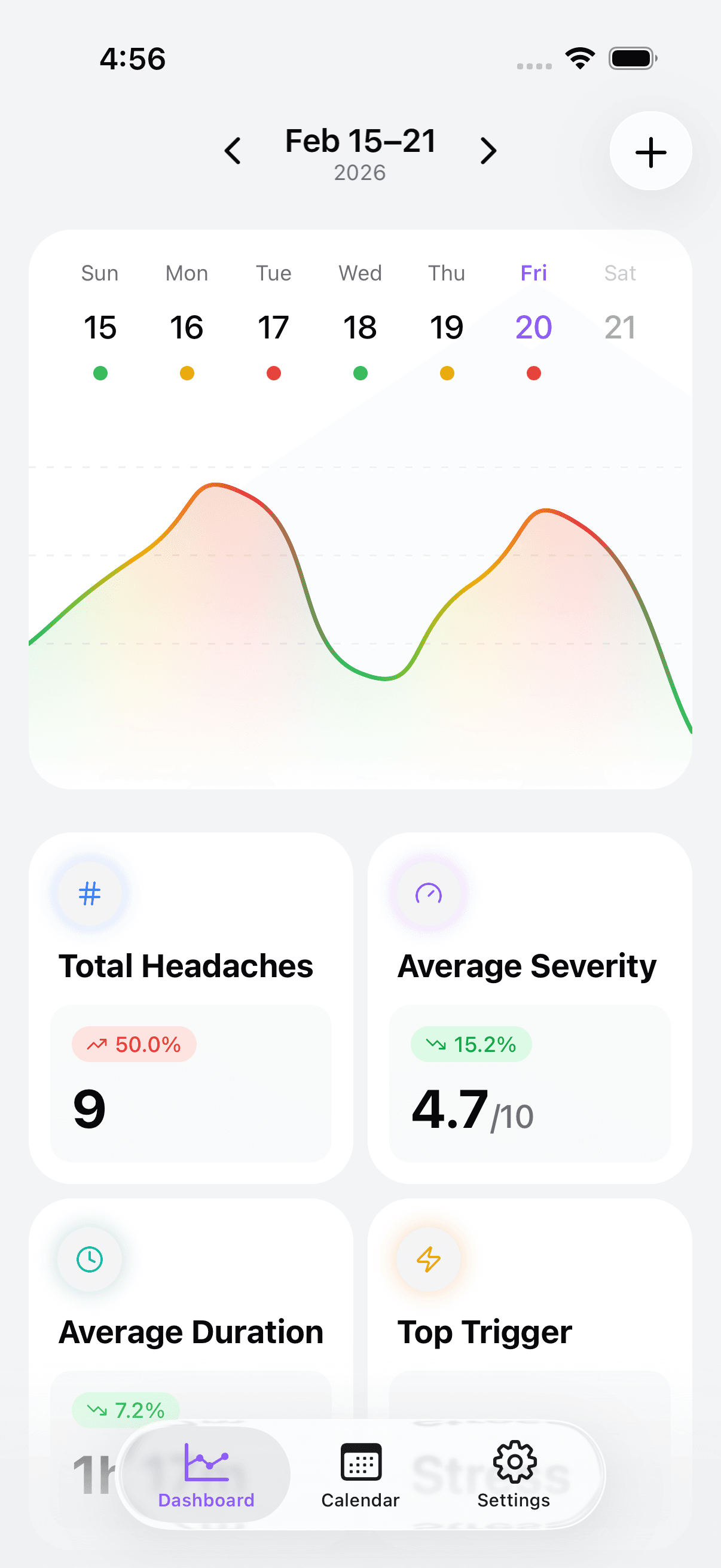
For the next two weeks, keep your caffeine at a steady amount and drink it at the same times every day, weekends included. Write down what you have and when. Headache & Migraine Diary lets you log each headache in seconds, tag caffeine as a possible trigger and add notes, so you can look back and see whether your headache days line up with too much caffeine, or with too little.