
You get through a demanding week, finally reach Saturday morning, and wake up with a headache. It feels unfair, and it's surprisingly common. Weekend headaches, sometimes called weekend migraines, usually aren't caused by the weekend itself. They come from the way your routine suddenly changes when the week ends.
This guide explains the most common causes of weekend headaches, how to tell which ones apply to you, and the small changes that usually make the biggest difference. The same ideas apply to vacations and other "transition days" when your routine shifts.
Why your days off can trigger headaches
Sleeping in
The most common culprit is sleeping in. After a week of early alarms, it's natural to sleep until 10 on Saturday. But a big change in your wake-up time can trigger headaches in people who are prone to them. The Migraine Trust notes that people with migraine often don't cope well with changes to their routine, and gives exactly this example: waking at 7 a.m. on weekdays and then sleeping in until 10 on a Saturday may trigger an attack.1
It isn't only the extra sleep. Sleeping in late shifts everything that comes after it.
Later coffee
If you drink coffee or tea at the same time every weekday, sleeping in delays your first cup by hours. For regular caffeine drinkers, that gap can be enough to bring on a caffeine-withdrawal headache. The International Classification of Headache Disorders describes this headache in people who regularly have more than 200 mg of caffeine a day when their intake is interrupted or delayed. It starts within 24 hours of the last dose and is typically relieved within an hour of having caffeine.3 If your weekend headache eases soon after your first coffee, this may be part of it.
Skipped or late meals
Weekends often mean a late breakfast, or breakfast and lunch rolled into one. The Migraine Trust points out that shifted mealtimes can lead to a drop in blood sugar or a caffeine craving that sets off an attack.1 We cover this in more detail in hunger headaches.
The drop in stress
This one surprises people: relaxing can trigger a headache. It's sometimes called a "let-down" headache. A 2014 study published in Neurology followed 17 people with migraine for three months using daily diaries. It found that the level of stress itself wasn't generally linked to attacks, but a drop in stress from one evening to the next was linked to a higher chance of a migraine starting over the following 6 to 18 hours.2 The study was small, but it matches what many people notice: the headache arrives right after the deadline, not during it.
That doesn't mean stress is good for you. It suggests that winding down gradually, rather than going from full speed to a complete stop, may help. Our guide to stress headaches covers stress and headaches more broadly.
Late nights and alcohol
Friday and Saturday nights often mean staying up later and having a drink or two. Both can disrupt sleep, and some people find alcohol triggers headaches on its own. Combine a late night with sleeping in, a late coffee and a skipped breakfast, and you have several triggers stacked on one morning.
Find your own weekend pattern
Most weekend headaches come from two or three of these causes together, and the mix is different for everyone. A headache diary is the quickest way to find yours. For three or four weekends, and a few weekdays to compare, note:
- What time you went to bed and woke up.
- When you had your first caffeine of the day.
- When you ate breakfast and lunch.
- Alcohol the night before.
- How stressful the week was, and whether you had a headache.
Then compare weekends with and without headaches. You might find that sleeping in alone is fine but sleeping in plus a late coffee isn't, or that headaches only follow especially stressful weeks.
What helps
You don't need to give up your weekend. Small changes to keep your routine steady usually do most of the work.
Keep your wake-up time close to your weekday one. Aim for within about an hour. If you're short on sleep, go to bed earlier on Friday instead of sleeping much later on Saturday. Our guide to sleep and headaches explains why consistency matters more than catching up.
Have your first coffee at the usual time. If you want to sleep in, have a cup when you would normally wake up on a weekday. If you'd rather reduce your caffeine, cut down gradually over weeks, not by skipping it on Saturdays.
Eat breakfast. Even something small at your usual time keeps your blood sugar steadier than a late brunch.
Wind down gradually. Rather than going from a hectic Friday straight to doing nothing, keep some light structure on Saturday morning: a walk, a regular breakfast, a few small tasks.
Go easy on Friday night. Less alcohol and a not-too-late bedtime protect Saturday morning.
If you wake up with a headache anyway, the usual treatment you'd take for your headaches applies. If you find you're taking painkillers every weekend on top of weekday headaches, keep an eye on how many days a month you use them, because taking pain relief too often can lead to medication overuse headache. If you regularly wake up with headaches on weekdays too, see our guide to morning headaches.
When to see a doctor
See a doctor if your headaches are frequent, getting worse, or affecting your weekends and daily life, or if you're using pain relief on many days each month.
Get urgent help for a headache that starts suddenly and is extremely painful, or comes with weakness, numbness, confusion, trouble speaking, loss of vision, a seizure, or a high temperature with a stiff neck.4 Our guide on what to do when a headache starts covers the warning signs.
Getting started
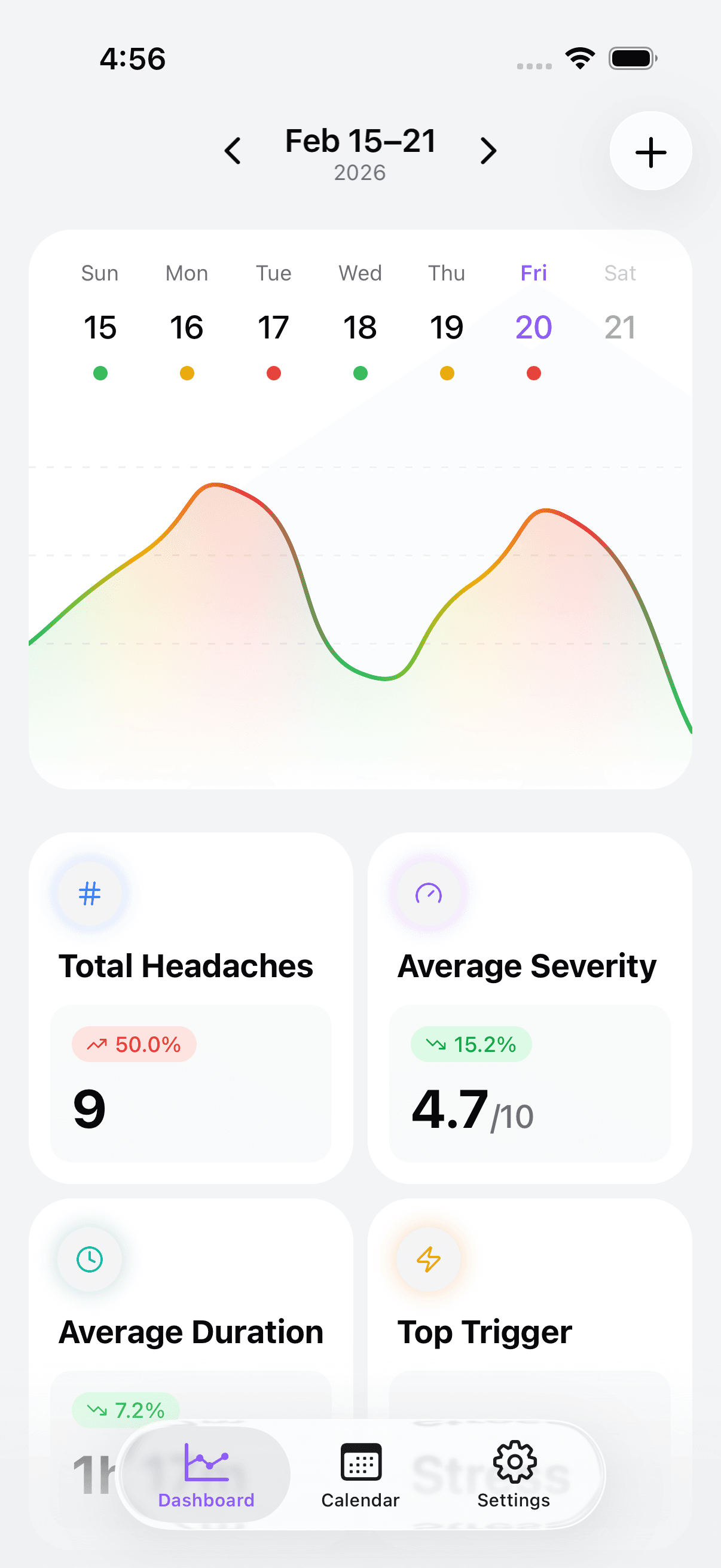
This weekend, try one change: set an alarm within an hour of your weekday wake-up time and have your usual coffee and breakfast. To see whether it helps, Headache & Migraine Diary lets you log each headache in seconds and shows your headache days on a calendar, so it's easy to spot whether they cluster on Saturdays and whether that changes once your routine is steadier.