Waking up with a headache is a rough way to start the day. You haven't done anything yet, so it can feel random. It usually isn't. Morning headaches tend to come from what happened overnight or the evening before: how long and how well you slept, when you last had caffeine, what you drank, and what your jaw and neck were doing while you slept.
This guide covers the most common causes of morning headaches, how to work out which ones apply to you, and the signs that mean you should see a doctor.
The most common causes
Too little sleep, or too much
Sleep is the most common thread. Short or broken sleep is a well-known headache trigger, but oversleeping can be one too. The Migraine Trust notes that some people wake with a migraine after sleeping in, while others get attacks after missing sleep, and that people with migraine often cope badly with changes to their routine.1 Sleeping until 10 on a Saturday after a week of 7 a.m. alarms is a classic example, and it's one reason headaches cluster on days off. Our guide to weekend headaches looks at that pattern in detail.
The fix is less about getting a perfect night and more about consistency: going to bed and waking up at roughly the same time every day, including weekends. We cover this more fully in sleep and headaches.
Caffeine withdrawal
If you drink coffee or tea every day, your body gets used to it. Overnight is the longest stretch you go without caffeine, so by the morning some regular drinkers are already feeling the gap. The International Classification of Headache Disorders describes caffeine-withdrawal headache in people who regularly have more than 200 mg of caffeine a day when that intake is interrupted or delayed. The headache starts within 24 hours of the last dose and is typically relieved within an hour of having caffeine.2
That's why a headache that lifts soon after your first coffee, or shows up on days you sleep in and have it later than usual, is worth noting. If you want to cut down, reduce gradually rather than stopping suddenly, and keep the timing of your first caffeine of the day consistent.
Alcohol the night before
Alcohol disturbs sleep, even when it helps you fall asleep, and it's a common trigger for both hangover headaches and migraine. If your morning headaches often follow evenings with a drink or two, a diary will show it quickly.
Teeth grinding and jaw clenching
Many people grind or clench their teeth during sleep without knowing it. The NHS lists headaches, earache and a painful jaw among the symptoms of teeth grinding (bruxism), along with worn teeth and disturbed sleep. Stress and anxiety are the most common causes, and snoring and sleep apnea are linked to it too.3
Clues include a sore or tired jaw when you wake, pain around the temples or in front of the ears, or a partner hearing you grind. A dentist can check for wear on your teeth and may suggest a mouth guard or splint to wear at night. Daytime clenching, especially during stressful or screen-heavy days, can feed into the same pattern.
Neck and sleeping position
A pillow that's too high or too flat, or sleeping on your front with your neck twisted, can leave your neck and shoulders tense by morning. This tends to cause a pressing, band-like headache rather than a throbbing one, the kind usually classed as a tension-type headache. Our guide to tension headache vs migraine explains how to tell them apart.
Sleep apnea
Obstructive sleep apnea is when your breathing repeatedly stops and starts during sleep. The NHS lists waking up with a headache as one of its effects, alongside loud snoring, gasping or choking noises at night, and feeling very tired during the day.4 The Migraine Trust describes sleep apnea headaches as usually affecting both sides of the head with a pressing feeling, and notes that they often improve once the apnea is treated.1
If your morning headaches come with heavy snoring, a partner noticing pauses in your breathing, or constant daytime sleepiness, see a doctor. Sleep apnea is diagnosed with a sleep study, and it's worth treating for far more reasons than headaches.
Painkillers taken too often
Taking pain relief on many days a month can lead to medication overuse headache, which is often present on waking and tends to come back as each dose wears off. If you're taking painkillers for headaches on most days, talk to a doctor before changing anything yourself.
Migraine timing
Some morning headaches are migraine attacks. Migraine usually causes throbbing or pulsing pain, often on one side of the head, with nausea and sensitivity to light and sound, and an attack can last from hours to days.6 If your morning headaches sound like this, or last for hours despite simple painkillers, migraine is worth discussing with a doctor.
How to find your cause
Most people have more than one of these going on, and they stack. A short night alone might be fine; a short night plus a glass of wine plus a later-than-usual coffee might not be. That's why guessing rarely works, and a headache diary does.
For two to three weeks, note each evening and morning:
- When you went to bed and woke up, and roughly how well you slept.
- Caffeine: how much, and when your last and first cups were.
- Alcohol the evening before.
- Whether your jaw or neck felt sore on waking.
- Whether you woke with a headache, how bad it was, and what you took for it.
Then compare the mornings you woke with a headache against the mornings you didn't. Patterns tend to jump out: headaches after nights under six hours, on days your first coffee was late, or after evenings with alcohol. Change one thing at a time, such as a fixed wake-up time, and give it two to three weeks before judging.
Simple things that often help
- Keep a steady sleep schedule, with the same wake-up time every day, including weekends.
- Keep caffeine timing consistent. Have your first cup at a similar time each day, and avoid caffeine late in the afternoon so it doesn't disturb your sleep.
- Drink some water in the evening and when you wake, and don't skip breakfast. The Migraine Trust suggests both for people who get morning attacks.1
- Check your pillow and position. Your neck should stay roughly in line with your spine.
- See a dentist if you suspect grinding. A night guard protects your teeth and can ease jaw-related pain.
When to see a doctor
Book an appointment if you wake with headaches on most days, if they're getting more frequent or severe, if you snore heavily or feel exhausted during the day, or if you're taking painkillers for them on many days a month. Headaches that wake you from sleep at night are also worth getting checked.
Get urgent help if a headache starts suddenly and is extremely painful, follows a head injury, or comes with weakness, numbness, confusion, trouble speaking, loss of vision, a seizure, or a high temperature with a stiff neck. The NHS also advises an urgent doctor's appointment for headaches that come with vomiting or get worse when you cough, sneeze or bend down.5 Our guide on what to do when a headache starts covers these warning signs.
Getting started
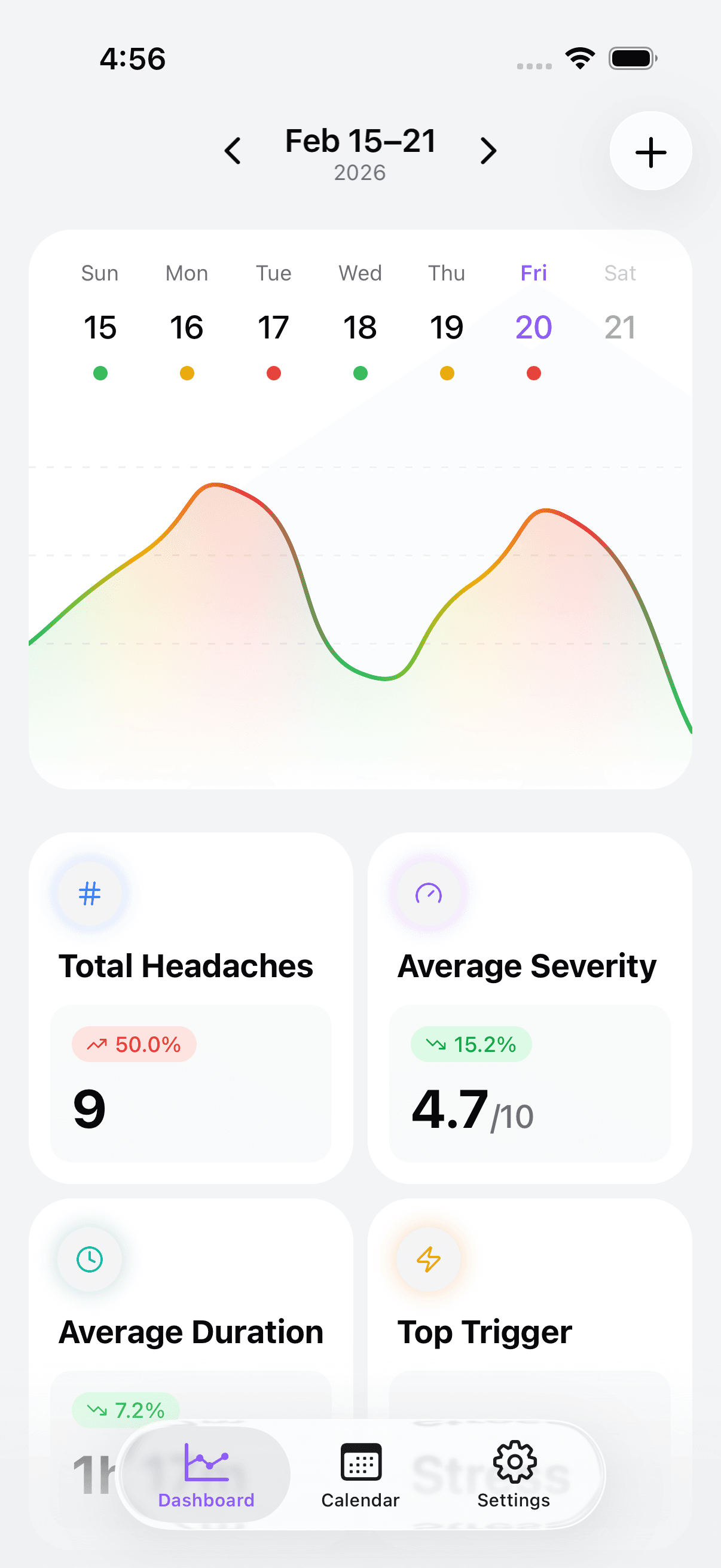
Pick one likely cause and start there: a fixed wake-up time is a good first step for most people. To see whether your morning headaches line up with short sleep, caffeine or alcohol, Headache & Migraine Diary lets you log a headache in seconds, with its time, severity and triggers like lack of sleep, caffeine and alcohol, so the pattern becomes clear over a few weeks.