
If your headaches tend to show up mid-afternoon on a Tuesday rather than on a lazy Sunday, your workday is probably part of the picture. Headaches at work are rarely caused by one thing. They tend to build up from a mix of small strains: hours at a desk, bright screens and lighting, noise, a skipped lunch, too much coffee and a stressful to-do list.
This guide looks at the most common causes of headaches at work, the changes you can make yourself, and the support you can ask your employer for.
Why work brings on headaches
Desk posture and muscle tension
Sitting for hours with your head pushed forward toward a screen, shoulders raised and jaw clenched in concentration puts sustained strain on your neck and shoulders. That kind of muscle tension is a common contributor to tension headaches, which the NHS describes as a pressing or tightening pain on both sides of the head.5 If you're not sure whether your work headaches are tension headaches or migraine, see tension headache vs migraine.
Screens, lighting and glare
Long stretches of screen work can cause digital eye strain. Cleveland Clinic lists headaches among its symptoms, along with neck and shoulder pain, blurred vision and dry eyes.4 Harsh overhead lighting, glare on your screen and flickering bulbs can make things worse. The Migraine Trust notes that screens, glare and flickering lights can seem to trigger migraine attacks or make them worse.3 Our guide to screen headaches covers eye strain and video calls in detail.
Noise and sensory overload
Open-plan offices, ringing phones and constant notifications add up. Many people find their headaches build on days with a lot of noise and interruption, even when the work itself isn't hard. If strong smells from a colleague's perfume, air fresheners or cleaning products bother you, see perfume headaches.
Skipped meals, caffeine and dehydration
Busy days make it easy to work through lunch, forget to drink water, and lean on extra coffee to keep going. The Migraine Trust points out that when you're stressed you may be less likely to eat regularly and more likely to drink extra caffeine and work longer hours, all of which can contribute to a migraine attack.2 Our guide to hunger headaches explains why skipped meals are such a common trigger.
Stress and deadlines
Stress is one of the most common triggers for both tension headaches and migraine.25 And because the effects of stress can come after the stressful period ends, some people get their worst headaches on the evening a big deadline passes, or the first morning of a weekend. More on that in stress headaches.
What you can change yourself
Set up your screen properly. The American Academy of Ophthalmology recommends sitting about 25 inches (about 64 cm, roughly arm's length) from the screen, positioned so your gaze falls slightly downward.7 If you work on a laptop all day, a stand and separate keyboard make a big difference to your neck.
Take regular screen breaks. Try the 20-20-20 rule: every 20 minutes, take a 20-second break to look at something about 20 feet (6 meters) away.4 The Migraine Trust suggests looking away from the screen for a few minutes about every hour.3
Cut glare. Position your screen so it doesn't face a window, consider an anti-glare filter, and get flickering lights replaced promptly.3
Eat lunch, and keep water on your desk. A regular lunch break does more for headaches than most gadgets. Set a reminder if your calendar tends to swallow it.
Keep caffeine steady. Have your usual amount at your usual times, rather than drinking more as the day gets harder.
Move and loosen up. Stand up, stretch your neck and shoulders, and check whether you're clenching your jaw. For tension headaches, the NHS suggests relaxing activities like exercise, yoga and massage.5
Protect some quiet. Use headphones or a quiet room for focused work, batch notifications, and leave short gaps between meetings rather than booking back-to-back.
Getting support from your employer
If headaches regularly affect your work, it's worth talking to your manager. You don't have to share your health information, but explaining how headaches affect you can make it easier to get support.1
Rules differ between countries. In the UK, The Migraine Trust explains that migraine may be classed as a disability if it has a substantial, long-term effect on your normal day-to-day activities, and in that case your employer must make reasonable adjustments.1 Its examples include:
- Flexible working patterns and regular, flexible breaks.
- Working from home, where possible.
- Fixing problems with lighting, noise and ventilation.
- Equipment such as a comfortable desk and chair and anti-glare screens.
- Access to drinking water.
- Time off for medical appointments, and allowances for migraine-related sickness absence.
- A quiet, dark space to use during an attack.
Even outside formal legal protections, many employers will make small changes like these when asked. The Migraine Trust suggests thinking carefully about what support you need before the conversation, keeping a diary to help identify triggers, and keeping a written record of your request.1
Find your workday pattern
A headache diary shows which parts of your workday matter most. For a few weeks, note when your headaches start, what kind of day it was (meetings, deadlines, screen hours), whether you ate lunch, and how much coffee you had. Compare workdays with days off. You might find your headaches follow long meeting days, skipped lunches or a particular meeting room, and that's exactly the kind of specific detail that helps when you ask for changes at work.
When to see a doctor
See a doctor if you get headaches several times a week, if they're severe, or if painkillers and changes to your routine don't help.5 Get urgent help for a headache that starts suddenly and is extremely painful, or comes with weakness, numbness, confusion, trouble speaking, loss of vision, a seizure, or a high temperature with a stiff neck.6 Our guide on what to do when a headache starts lists the warning signs.
Getting started
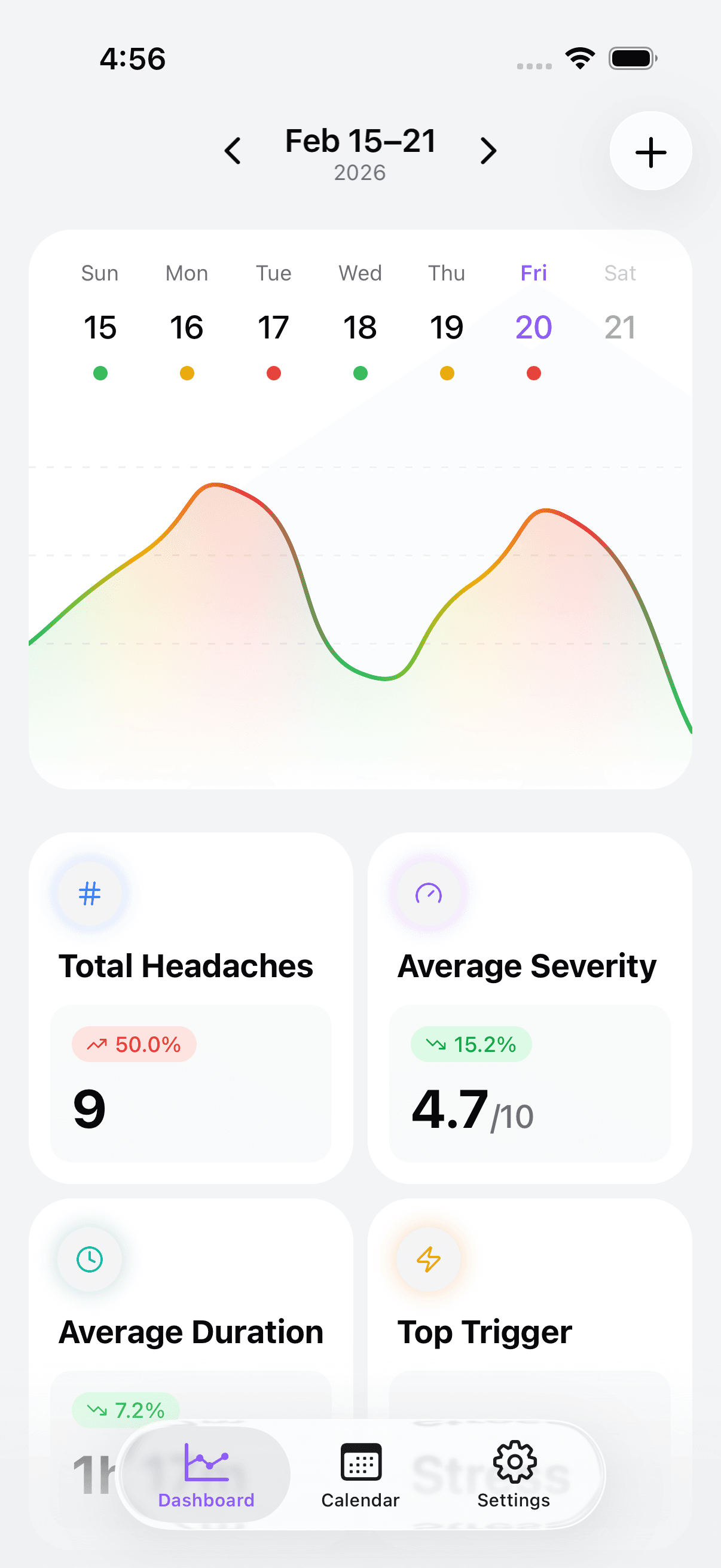
Pick the two changes most likely to matter for you, such as a proper lunch break and the 20-20-20 rule, and stick with them for two weeks. To see whether they help, Headache & Migraine Diary lets you log each headache in seconds and tag triggers like stress, screen time and caffeine, so you can see whether your workday headaches become less frequent.