The pain starts around one eye and builds within minutes into something so severe you can't sit still. Your eye waters, your nose runs on the same side, and you pace the room until it stops, often 30 minutes to an hour later. Then it comes back the next day at almost the same time, and the day after that. This is the typical pattern of a cluster headache.
Cluster headaches are rare, but they are often described as the most painful type of headache.3 They are also often mistaken for migraine or sinus problems, which can delay the right treatment. This guide explains what a cluster headache is, the symptoms that set it apart, what's known about the causes and triggers, how cluster headache treatment works, and the warning signs that need urgent care.
What is a cluster headache?
A cluster headache is a primary headache, which means it isn't caused by another illness.12 It belongs to a small group of headache disorders that cause one-sided head pain together with symptoms in the eye and nose on the same side.4
The name comes from the way the attacks arrive. They come in clusters, or bouts: a period of weeks or months with attacks every day or most days, followed by a break when the headaches stop.23 That pain-free break is called remission, and it can last months or even years before the next bout starts.34
Cluster headaches affect an estimated 1 in 1,000 people.2 They usually start between the ages of 20 and 40, and men get them about three times as often as women.4 Mayo Clinic notes that recent studies suggest women with cluster headaches are sometimes misdiagnosed with migraine or sinusitis.3
Cluster headache symptoms
The pain of a cluster headache is severe and stays on one side of the head. It is usually in, behind or around one eye, and it can also sit above the eye or at the temple.124 People describe it as sharp, burning, stabbing or piercing.12 It usually reaches its worst within 5 to 10 minutes.2
On the same side as the pain, you may also have:124
- a red, watering eye
- a drooping or swollen eyelid
- a smaller pupil in that eye
- a blocked or runny nostril
- sweating or flushing on the forehead or face
Restlessness is one of the clearest signs. Most people with a cluster headache can't lie down and feel the urge to pace, rock or move around during an attack.134 Some people also feel sick, and a few get migraine-like symptoms such as nausea or an aura before the pain.13
How long do cluster headaches last?
A single attack lasts between 15 minutes and 3 hours, and most often 30 to 45 minutes.3 Attacks can come anywhere from once every other day up to eight times a day.4 The pain tends to stop as suddenly as it started, and many people feel exhausted afterwards.3
Timing is a strong clue. Attacks often happen at the same time each day, and most happen at night, usually one to two hours after going to bed.3 That's why cluster headaches are sometimes called "alarm clock headaches."2 Bouts can also follow the calendar: many people notice them starting at the same time of year, often in spring or autumn.23
Episodic and chronic cluster headaches
Most people have episodic cluster headaches. A bout lasts from about a week to a year, followed by at least three months without attacks.3 A smaller group, about 10 to 15% of people with cluster headaches, have the chronic form, where there is no real remission or the pain-free periods last less than a month.34 About one in four people have only a single cluster period in their life.4
Cluster headache vs migraine
Cluster headaches and migraine can both cause one-sided pain, nausea and even aura, so they are easy to confuse.13 A few differences usually tell them apart:
- Movement. Migraine pain tends to get worse with physical activity, so people often want to keep still, away from light and noise.2 During a cluster headache, most people can't keep still.4
- Length and frequency. Cluster attacks are short (15 minutes to 3 hours) but can come several times a day, every day, for weeks.14
- Eye and nose symptoms. A watering red eye, drooping eyelid and runny nostril on the side of the pain are typical of cluster headache.14
- Clockwork timing. Attacks at the same time each day, often waking you from sleep, point towards cluster headache.3
Cluster headaches are also very different from the band-like, mild to moderate pain of a tension headache.2 The difference between a tension headache and a migraine is subtler, and those two are much easier to mix up.
What causes cluster headaches?
Nobody knows exactly what causes cluster headaches.13 The strongest lead is the hypothalamus, a part of the brain that runs the body's internal clock. Brain scans show activity in this area during attacks, which fits with how regular the timing of attacks and bouts can be.234 Cluster headaches can run in families, and a close family member with them raises your risk.13
Cluster headache triggers
Triggers don't cause cluster headaches, but they can set off an attack during a bout. Alcohol is the best known, and it matters most during a bout: drinking during a cluster period can bring on an attack.34 Smoking is the other common trigger, and many people with cluster headaches smoke, although stopping usually doesn't make the headaches go away.3
Other triggers that sources list include:123
- strong smells, such as perfume, paint, nail varnish or petrol
- exercise
- bright light and hot temperatures
- nitrites in processed and cured meats
- some medicines, such as sildenafil and nitroglycerin
- changes in the weather
If smells seem to set off your attacks, the same steps that help with fragrance headaches can cut down your exposure. Noting possible triggers next to each attack is the simplest way to spot your own headache triggers.
How cluster headaches are diagnosed
There's no blood test or scan that confirms a cluster headache. A doctor makes the diagnosis from the pattern of your attacks: where the pain is, how long it lasts, how often it comes and what other symptoms you have.12 They may arrange a brain scan, such as an MRI, to rule out other causes.12 Because the diagnosis depends so heavily on your description, a record of each attack is one of the most useful things you can bring.
Cluster headache treatment
There's no cure for cluster headaches, but treatment can shorten attacks, ease the pain and reduce how many attacks you get.123 Treatment often involves a specialist and has two parts.
Treating an attack
Ordinary painkillers such as ibuprofen and paracetamol (acetaminophen) don't work for cluster headaches.12 Treatments that can help once an attack has started include:12
- Oxygen, 100% oxygen breathed through a face mask.
- Triptans given as an injection or nasal spray.
- A nerve stimulation device that gives mild electrical pulses to the back of the neck.
Preventing attacks
Because attacks can come several times a day during a bout, most people also need preventive medicine to take every day while a bout lasts. Options a specialist may suggest include verapamil, corticosteroids, lithium, and galcanezumab, a CGRP antibody approved in the US as a preventive treatment.12 Your doctor will explain how to take them and what to watch for. Never start or stop these medicines without talking to your doctor.
If medicines don't help, a small number of people are offered an implanted device that stimulates nerves in the head.12
Cluster headaches and your mood
Daily attacks of severe pain take a heavy toll. Cluster headaches can make it hard to work, sleep or plan anything, and a few people develop depression.2 If the pain is making you feel hopeless or you're having thoughts of suicide, tell your doctor and contact a crisis line or your local emergency number right away. In the US, you can call or text 988, the Suicide and Crisis Lifeline.2 Cluster headaches don't shorten life, and for many people they become less frequent with age.2
When to get medical help
See a doctor if you think you might have cluster headaches, if your headaches keep coming back, or if painkillers don't help.1 Also see your doctor if you've been diagnosed and your attacks get worse, last longer or stop responding to your usual treatment.1
Get emergency help straight away if, for the first time, one of your eyelids droops or one pupil is smaller than the other. This applies even if you've already been diagnosed with cluster headaches.1 Also get emergency help for:3
- a sudden, severe headache that comes on like a clap of thunder
- a headache with a fever, stiff neck, confusion, seizures, numbness or trouble speaking
- a headache after a head injury
- a headache that keeps getting worse over days and changes its pattern
Get an urgent appointment if a severe headache comes with jaw pain when eating, blurred or double vision, or a sore scalp.1 Knowing these headache warning signs matters even if you've had headaches for years.
Getting started: track your attacks
Cluster headaches are diagnosed from patterns, so writing down each attack pays off. The details that matter most are the time it started, how long it lasted, which side and where it hurt, any eye or nose symptoms, what treatment you used and whether it worked, and anything that came before it, such as alcohol, a strong smell or a nap.2 Over a bout, those notes show your doctor how often attacks come, when they happen and how well treatment is working. Since attacks often wake you at night, it's also worth noting how you slept, because sleep and headaches are closely linked.
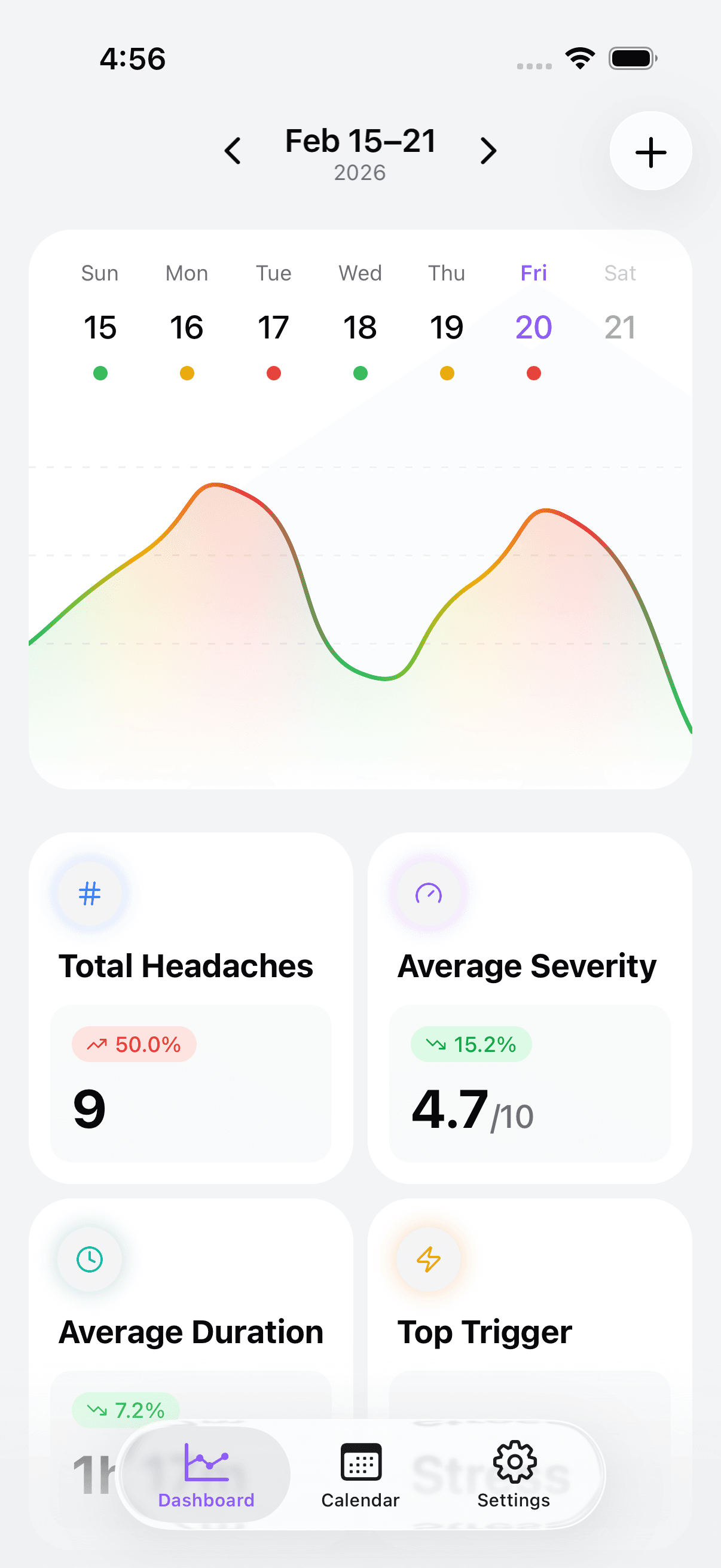
You can keep these notes on paper or in an app. Headache & Migraine Diary lets you log the start time, duration and location of each attack (including behind the eyes or at the temple), tag triggers such as alcohol, and record the medicines you used. The calendar then shows when each bout started and ended. Paper works just as well: what matters is that you keep a headache diary through the whole bout, including the days without attacks.