
Headache caps, the stretchy gel hats you keep in the freezer and pull down over your forehead and eyes, have become a popular way to get through a migraine attack without reaching straight for another pill. They're simple, cheap and reusable. The obvious question is whether they actually help, or whether it's just a cold hat.
This guide covers what the research says about cold caps for migraine, when heat may suit you better, how to use a headache cap safely, and how to tell whether one is worth keeping.
What a headache cap does
Most headache caps are soft, stretchy wraps filled with cooling gel. You chill them in the freezer, then wear them over your forehead, temples and often your eyes. That gives you three things at once: cold, gentle pressure from the snug fit, and darkness if the cap covers your eyes. Some caps can also be warmed in a microwave instead.
None of this is new. Cold has long been the most common thing people with migraine reach for themselves. A 2013 study noted that cold therapy is the number one self-care treatment reported for migraine without aura, and that doctors have been writing about it since the 1840s.2 What's new is the wearable design, which keeps the cold in place while you lie down.
What the research says about cold caps
The evidence is encouraging, but small. A 2022 review in the Journal of Clinical Nursing found six studies of cold treatments for migraine, including a cold-gel headband and a cold-gel cap. Taken together, cold treatments reduced migraine pain 30 minutes after they were used, compared with no cold treatment. The review didn't find a clear effect 24 hours later, and it rated the certainty of the evidence as very low to moderate.1
The other study worth knowing about tested a frozen wrap around the front of the neck rather than a cap on the head. In this randomized trial, 55 people with migraine put the wrap on at the start of an attack. After 30 minutes, their pain had dropped by about 32% on average, while in the comparison period it had risen by about the same amount.2
So the realistic picture is this: cold can take the edge off migraine pain in the short term for many people, but it isn't a treatment that changes how often you get migraine, and it doesn't replace the medication your doctor has prescribed. Think of a headache cap as one tool for getting through an attack, used early and alongside your usual plan.
Cold or heat?
For migraine, most people reach for cold, and that's where the research is. Tension headaches are different. The Mayo Clinic says that applying heat or ice, whichever you prefer, to sore muscles may ease a tension-type headache. For heat it suggests a heating pad set on low, a hot-water bottle, a warm compress or a hot bath or shower.3
In practice, that means it's worth trying both. Cold on the forehead and temples often suits a throbbing headache. Warmth on a tight neck and shoulders often suits a pressing, band-like one. If you're not sure which kind of headache you get, our guide to tension headache vs migraine explains the difference.
How to use a headache cap safely
Start early. Put the cap on as soon as you notice an attack starting, rather than waiting until the pain peaks. In the neck-cooling trial, people put the wrap on at the start of the attack.2
Protect your skin. Gel straight from the freezer can be colder than it feels at first. The Mayo Clinic advises wrapping ice or an ice pack in a cloth to protect your skin.3 If the cap is very cold, wear a thin cloth layer underneath or let it sit for a minute before putting it on.
Use it in short sessions. Wear it for a while, take it off, and see how you feel. You can put it back on after a break rather than wearing it for hours. Stop if your skin turns very red or white, or feels painful or numb.
Keep it snug, not tight. The cap should feel supportive. If the pressure makes the pain or nausea worse, loosen it or switch to a cold pack you can hold in place. Some people become sensitive to touch during a migraine attack and prefer no pressure at all.
Make it part of your routine. The NHS suggests lying down or sleeping in a darkened room during a migraine attack.4 A cap that covers your eyes helps with that, especially when you can't make the room fully dark. Take your usual medication as your doctor has advised, drink some water, and rest.
Take extra care, or ask your doctor first, if you have poor circulation, reduced feeling in your skin, a condition that makes you sensitive to cold, or broken or irritated skin on your forehead or scalp.
Is it working for you?
Because the effect of a cap is short and varies from person to person, the only way to know whether it helps you is to keep track. For your next few headaches, note whether you used the cap, cold or warm, how soon after the headache started, how much it helped, and what else you did, like taking medication or lying down. A headache diary makes this easy to compare over time. After four or five headaches, you'll usually have a clear sense of whether the cap is worth keeping, and whether it works better for some kinds of headache than others.
If you find yourself relying on a cap and painkillers on more and more days, that's a sign to see your doctor. Frequent painkiller use can lead to medication overuse headache, and preventive treatment may help more than anything you do during an attack.
When to see a doctor
See a doctor if your migraine attacks are severe or getting worse, last longer than usual, or happen more than once a week, or if you're finding them hard to control.4 A headache cap can make attacks easier to get through, but it shouldn't hide headaches that need proper treatment.
Get urgent help for a headache that starts suddenly and is extremely painful, or comes with weakness, numbness, confusion, trouble speaking, loss of vision, a seizure, or a high temperature with a stiff neck.5 Our guide on what to do when a headache starts lists the warning signs.
Getting started
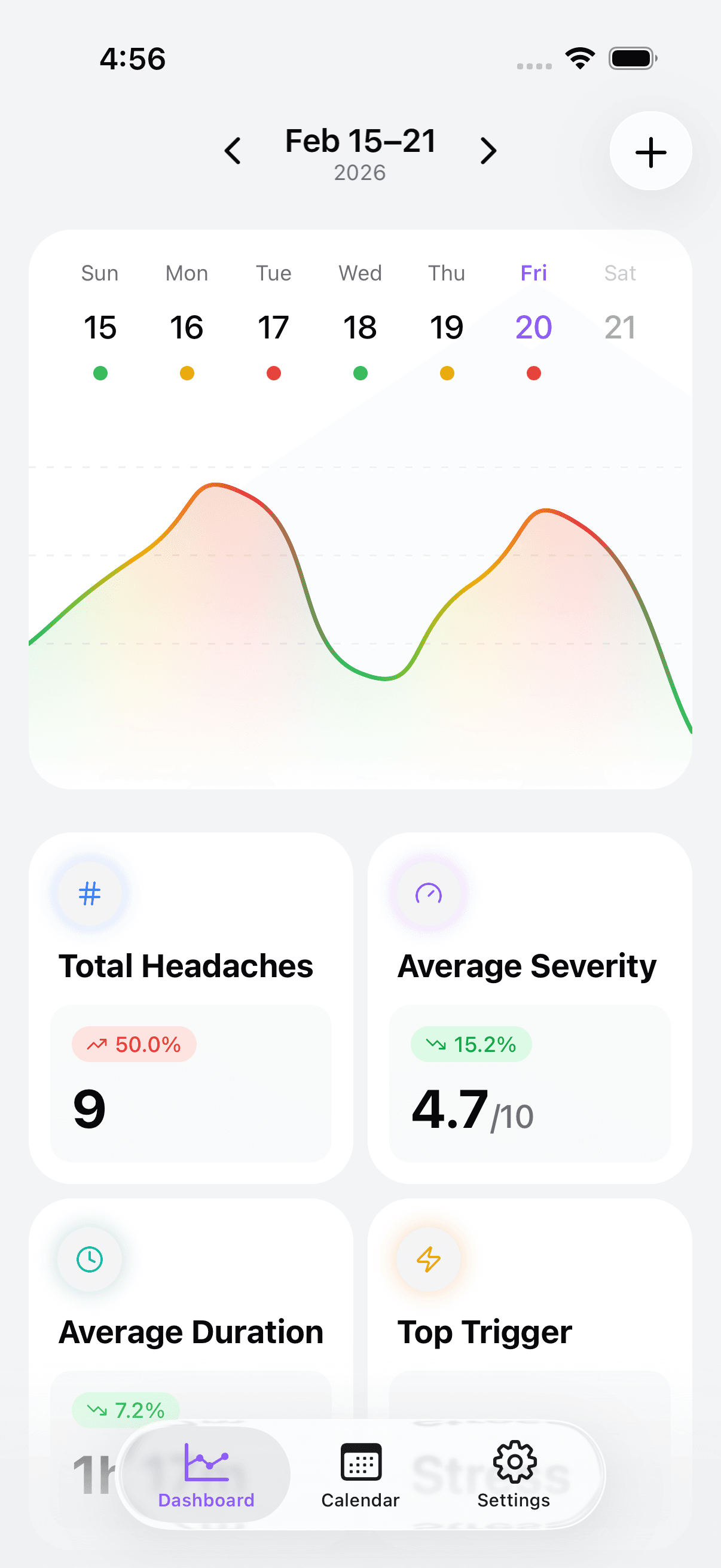
Keep a cap in the freezer so it's ready, and try it at the start of your next two or three headaches, with a cloth layer if it's very cold. To see whether it really helps, Headache & Migraine Diary lets you log each headache in seconds, with its severity, duration and a note on what you tried, so you can look back and compare the headaches where you used the cap with the ones where you didn't.