A shimmering blind spot appears in your vision, grows into a flickering zigzag, and then fades after twenty minutes or so. Sometimes a headache follows, sometimes it doesn't. Many people call this an ocular migraine, and it can be frightening the first time it happens.
The term is used loosely, though. Doctors use it for two different things: a common visual aura that comes from the brain, and a much rarer retinal migraine that affects one eye. This guide explains the difference, what causes ocular migraines, what helps, and which vision changes need urgent medical care.
What is an ocular migraine?
The American Migraine Foundation describes "ocular migraine" as a term used for several migraine types that cause visual disturbances, such as blind spots, zigzag lines, seeing stars or loss of vision. Unlike most migraine, these can happen without any head pain.1 In practice, it usually means one of two things.
Migraine with visual aura. This is by far the more common. Visual aura happens in over 90% of people who have migraine with aura, at least in some attacks.3 It often starts as a zigzag shape near the center of your vision that slowly spreads to one side, with a shimmering edge and a blind patch left behind it.3 It comes from the brain, so it affects the same side of vision in both eyes.
Retinal migraine. This is the narrower, medical meaning. Cleveland Clinic uses "ocular migraine" and "retinal migraine" as the same thing: attacks of visual problems in one eye, together with migraine headaches.2 The headache classification doctors use (ICHD-3) calls retinal migraine an extremely rare cause of short-lived vision loss in one eye.4
Ocular migraine vs migraine with aura
The key question is whether the problem is in one eye or in both. Cleveland Clinic explains that a retinal (ocular) migraine is a type of migraine aura that affects only one eye, while a migraine with aura affects both. The visual symptoms of a retinal migraine are usually shorter, and the headache tends to sit right behind the affected eye rather than spreading across the head.2
That sounds simple, but it's hard to judge in the moment. A visual aura on one side of your vision can easily feel like it's "in" one eye. The ICHD-3 notes that people often report a visual disturbance as being in one eye when it's actually in the same half of vision in both eyes, and that keeping an aura diary can help clarify the diagnosis.3 The American Migraine Foundation also says the two can be hard to tell apart, and that you should see a doctor if you think you're having retinal migraine symptoms.1
If it happens again and you feel safe to do so, cover one eye and then the other, and note whether the disturbance stays when the affected eye is covered. Write down or sketch what you saw afterwards. For a retinal migraine diagnosis, doctors look for vision changes in one eye confirmed by an eye exam during an attack or by the patient's own drawing of what they saw.4
Ocular migraine symptoms
According to Cleveland Clinic, the visual symptoms of a retinal migraine can include temporary:2
- blind spots, from partial to total loss of vision in that eye
- zigzag patterns
- shimmering or flickering lights
- floating lines
These usually last 10 to 20 minutes before vision slowly returns to normal, and attacks almost always affect the same eye.2 Under the ICHD-3 criteria, the symptoms typically spread gradually over at least five minutes, last 5 to 60 minutes, and come with or within an hour before a headache.4
The headache itself can come before, during or within an hour after the visual symptoms. It's usually moderate to severe and throbbing, often behind the affected eye, and can bring sensitivity to light, sound or smells, nausea and vomiting, and tiredness.2 Untreated, the headache can last from 4 to 72 hours.2
Visual aura without a headache is also possible. The ICHD-3 recognizes migraine aura that happens with no headache at all.3 If you aren't sure which kind of headache usually follows, our guide to tension headache vs migraine explains how to tell them apart.
What causes ocular migraines?
The exact cause isn't known. The American Migraine Foundation explains that visual aura is thought to come from a wave of unusual electrical activity that spreads slowly across the surface of the brain, at about 3 mm a minute, which is why the shape grows and moves over 20 to 60 minutes. Retinal migraine may be a similar disturbance in the retina at the back of the eye, or a drop in blood flow to the retina.1 Cleveland Clinic adds that genes seem to play a part, as about half of people with retinal migraine have a family history of migraine.2
Common triggers
Ocular migraines share triggers with migraine with aura. Cleveland Clinic lists stress, smoking, high blood pressure, hormonal birth control pills, exercise, bending over, high altitude, dehydration, low blood sugar, overheating, alcohol and caffeine.2 The American Migraine Foundation adds harsh or fluorescent lighting, long periods of looking at a screen, and long drives.1
Triggers vary a lot between people, and most attacks have more than one possible cause. Our guide to headache triggers explains how to test them one at a time, and if your attacks seem linked to long days at a computer, see our tips on headaches from screen time.
How long does an ocular migraine last?
The visual part is short. Cleveland Clinic gives 5 to 60 minutes for retinal migraine, most often 10 to 20 minutes.2 For visual aura, the NHS says aura symptoms shouldn't last longer than an hour.5 Any headache that follows can last much longer, from a few hours up to three days.25
Treatment and prevention
If ocular migraines are infrequent, such as once a month, Cleveland Clinic says doctors generally don't recommend treatment. When they're frequent, the aim is to make attacks less common: first by finding and avoiding triggers, and then, if that isn't enough, with preventive medicine. Calcium channel blockers are the usual choice, and aspirin or anti-seizure medicines may also help.2
The American Migraine Foundation says pain relief and anti-sickness medicines can help with infrequent attacks, recommends quitting smoking, and notes that stopping birth control pills may be advised in some cases. During an attack, resting your eyes, getting out of bright sunlight or harsh lighting, and taking a break from screens can help.1 Talk to your doctor about which treatment is right for you. If you're reaching for painkillers often, the NHS advises not taking them on more than 2 days a week, as that can cause more headaches.5 Our guide to medication overuse headache explains why.
For most people the outlook is good. Doctors generally consider ocular migraine harmless, although in rare cases it can lead to permanent vision problems.2 That rare risk is one reason a doctor should check it.
When to see a doctor
Cleveland Clinic advises seeing a doctor the first time you have an ocular migraine, to rule out a more serious eye or brain problem, and again if your symptoms change or get worse.2 Your doctor may refer you to an eye specialist.2 For migraine with aura, the NHS advises urgent medical advice if aura lasts longer than an hour or a migraine attack lasts longer than 72 hours.5
Sudden vision changes can also come from a stroke or a blocked blood vessel in the eye. Ocular migraine isn't a mini-stroke, but Cleveland Clinic says it's important to get medical care for sudden changes in your vision.2 Call your local emergency number right away if you have:25
- sudden loss of vision, or blurred or double vision
- weakness or numbness on one side of your face or body
- problems speaking, or slurred speech
- confusion or drowsiness
- a headache that comes on suddenly and is extremely painful
- dizziness or loss of balance with any of the signs above
Our guide on what to do when a headache starts covers the other headache warning signs.
What to do next
If you've had an ocular migraine, write down what happened while it's fresh: the date and time, which eye or side was affected, what you saw, how long it lasted, whether a headache followed, and what you were doing beforehand. A few of these records give a doctor far more to go on than a memory of "something wrong with my vision", and they're the start of a headache diary.
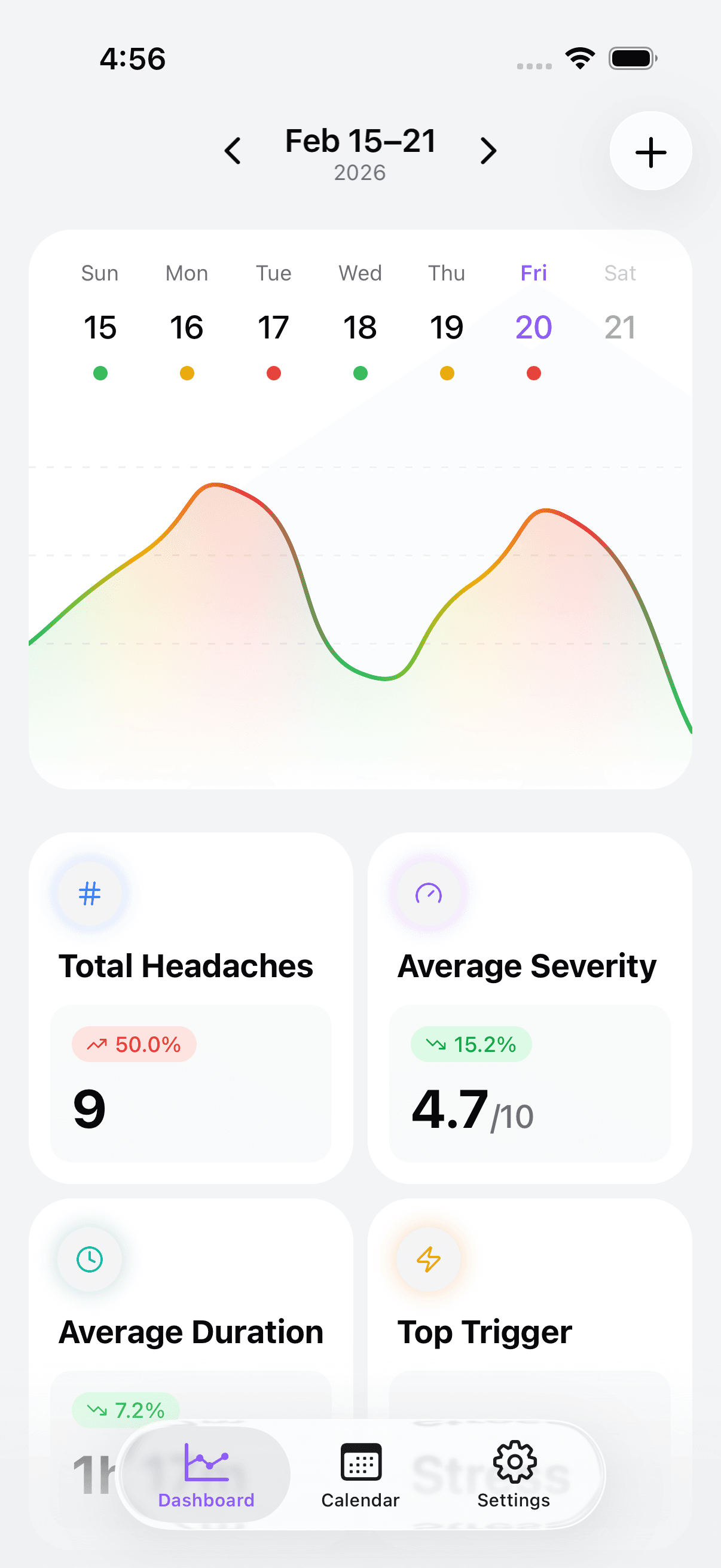
Headache & Migraine Diary can help with the headache side of this. You can log each headache's type, location, severity and duration, tag possible triggers such as stress, screen time, dehydration, caffeine or alcohol, and see patterns in the calendar and stats. The app doesn't have a dedicated field for aura, so describe the visual symptoms in a note (a Pro feature) or on paper, and bring both to your appointment.